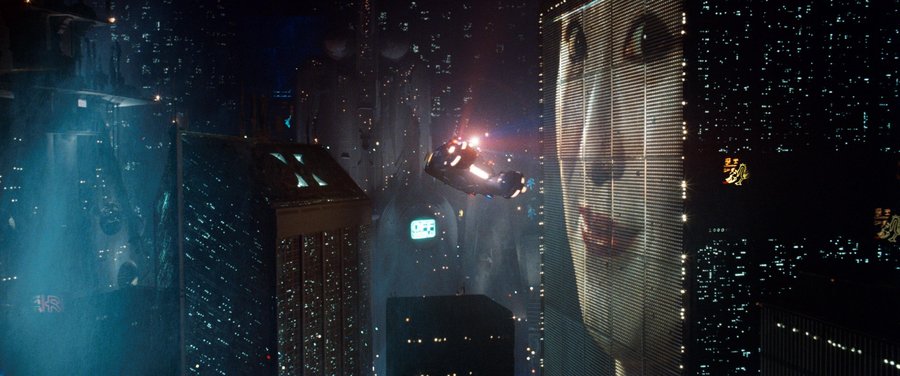
 After reading The Moon is a Harsh Mistress by Robert A. Heinlein to celebrate the 250th Anniversary of the United States, I decided—in the spirit of the holiday and our liberal tradition—to hold a vote for our next book club book. What followed was a complete surprise, as the group resoundingly voted for Comrade Constantine’s suggestion: Philip K. Dick’s classic sci-fi novel Do Androids Dream of Electric Sheep? Although I am a massive fan of Blade Runner, Dick’s original novel was never really on my radar. I had not even realized that the film was based on it. I knew The Man in the High Castle as Dick’s most famous title, while the acclaim surrounding Blade Runner seemed to have pushed its source novel into the background.
Like the film, Do Androids Dream of Electric Sheep? follows Rick Deckard, a bounty hunter seeking out several androids who have recently broken free of their enslavement and are now running rampant on earth. But there are a great many details in the book that are different from the film. For one, the setting: in the film, earth is a vibrant, if sleazy, cyberpunk metropolis; in the book, earth has been left desolate and almost uninhabitable following a nuclear holocaust. Most have decided to vacate to colonies among the stars, with only some outcasts and the mentally and physically feeble remaining below.
Because of the destruction of earth’s natural life, status is shown by taking care of animals. Some, like common farm animals, are considered the bare minimum; birds and insects are especially rare, and thus bring with them a special prestige. Those who are too poor to afford a real animal still need to demonstrate their fundamental humanity and status, and thus secretly keep robotic animals. Related, humans have developed an entire philosophy and religion centered around empathy. That is what, they seem to think, defines their humanity—and that is also why they care for animals, as a proof of their human reality. The test administered to androids, who are completely indistinguishable from humans without an intensive bone marrow test, is based on subtle psychosomatic responses to questions meant to elicit humanlike empathy, shame, disgust, etc.
Films do not exactly lend themselves to exposition in the same manner as novels. What a novel conveys in words, good films convey visually. This is another large difference between Blade Runner and Electric Sheep, most obviously in the final fight between Deckard and Roy Batty. In the film, this scene is long and has Batty psychologically taunting Deckard, following him through the crumbling ruins of an old apartment until the two stumble out into a storm washing some outcropping of the building. Deckard appears to have been beaten. He is far from an invulnerable hero, in both the novel and film; he’s really just an ordinary cop, and this android has beaten him. But the androids have a short lifespan. Batty’s body is nearing the end of its artificially shortened life. Drenched in rain, he delivers a strikingly human soliloquy on mortality and what it means to be alive.
Dick follows the pulpy, punchy detective genre that inspired him, and the fight is over quickly. There is no grand monologue at the end, and Roy Baty—the novel spells his name with one t—simply gets a bullet through the brain circuit. Instead, much of the discourse on humanity (mortality is clearly not the focus of the novel as it is in the film) is spread throughout. It emerges from the world itself, first, as one learns about the state of humans on earth, the distinction between those who remain healthy and those who have become stupid from radiation, the empathy test, Deckard’s individual encounters with psychopathic humans (Officer Resch) and individual androids, Mercer and the religion of sympathy boxes, and—of course—the way that humans care for animals, whether real or electric.
Gradually, Deckard begins to doubt the justness of his job. He has never viewed androids as anything other than potentially dangerous tools that can get out of hand, and has no problem “retiring” them. It is not until his encounter with Rachael Rosen that he begins to think about it, begins to realize how his own humanity necessitates his empathy for these beings. It isn’t that man feels compelled to care for animals—it is that man needs to care, needs to express empathy. When one looks into the sympathy box they feel better, knowing that they can both give to and receive comfort from other humans. Is it real? Probably not. And yet it is. Even if the connection is fake, the effects are real. It is the same with animals. Even if the animal is merely a machine, humans feel compelled to care for it as though it was real.
The conclusion of the novel seems to emphasize this point. After retiring the remaining androids Deckard rides out into the desert. There, he finds a toad. A toad! Like most small animals, they were among the first to go extinct. He catches it in a shoebox and brings it home, elated, to show his wife. Instantly, she recognizes it as a fake and points it out to her husband. This man, whose whole career is built on recognizing the real from the fake, who has just collected a near-record of bounties in one day against all odds—cannot recognize a clockwork toad. It doesn’t matter. They do not seem so disappointed. They pick up a catalog and begin ordering artificial flies and components for its enclosure.
← Back to Notebook